
SmartWear 2025
The 3rd Workshop on Smart Wearable Systems and Applications
In Conjunction with MobiCom 2025
Room 2463, HKUST Campus
November 8, 2025, Hong Kong
Workshop Program
08:30 – 08:45
08:45 – 09:45
Prof. Shengdong (Shen) Zhao, City University of Hong Kong
09:45 – 10:25
- OxBioZ: Wearable Continuous Bioimpedance Monitoring System and Multi-Activity Dataset with Physiological and Motion Signals[+]
Xinyu Hou (University of Oxford), Yiyuan Yang (University of Oxford), Jonas Beuchert (Cardiff University), Hakan Kayan (Cardiff University), Qian Xie (University of Leeds), Kim Tien Ly (University of Oxford), Qianyi Deng (University of Oxford), Nhat (Nick) Pham (Cardiff University), Andrew Markham (University of Oxford), Niki Trigoni (University of Oxford) - FreqLT: Frequency-Domain Linear Transformation for Privacy-Preserving and Efficient Machine Learning on Wearable Sensor Signals[+]
Shusheng Li (Research Institute of Advanced Equipment, Zhenjiang), Liang Chen (Harbin Institute of Technology, China), Yang Bo (McMaster University, Canada)
10:30 – 11:00
11:00 – 12:00
- WearGuard: Defeating Adversarial Attacks in Wearable AI-based Activity Recognition Systems[+]
Yihan Wang (City University of Hong Kong), Huanqi Yang (City University of Hong Kong), Weitao Xu (City University of Hong Kong) - Multi-Sensor Fusion for Indoor Smartphone Localization with Attention Mechanism[+]
Haoxuan Li (Heriot-Watt University), Xijia Wei (University College London), Zhiqiang Wei (Baidu Inc.), Valentin Radu (University of Sheffield), Cheng Wang (Heriot-Watt University), Wenda Li (Heriot-Watt University) - KneeSense: A Smart-Textile Knee Brace for In Situ Form Assessment in Remote Training and Rehabilitation[+]
Rongrong Gong (The Hong Kong University of Science and Technology), Haosong Zhong (The Hong Kong University of Science and Technology), Mitch Guijun Li (The Hong Kong University of Science and Technology)
Keynote Speaker
Heads-Up Computing: Towards the Next Interaction Paradigm for Wearable Intelligent Assistants
Abstract
Heads-up computing, an emerging paradigm in human-computer interaction (HCI), aims to create seamless interactions with technology through wearable intelligent assistants. This vision relies on three crucial components: (1) bodily compatible hardware, (2) multimodal complementary interactions, and (3) interfaces that accommodate fragmented attention and are aware of potential resources. Recent advancements in large language models (LLMs) have significantly accelerated progress in these areas, enabling more natural, context-aware, and proactive systems. These developments are pushing heads-up computing beyond simple notifications to complex, multi-modal interactions that blend seamlessly with our environment and daily activities, allowing for efficient information processing in everyday life. However, as we integrate these AI-driven assistants more deeply into our lives, we must carefully consider ethical implications such as privacy and cognitive load. Balancing technological advancement with human-centered principles is crucial to create systems that enhance productivity while respecting user autonomy and well-being, ultimately augmenting human capabilities without compromising fundamental values.
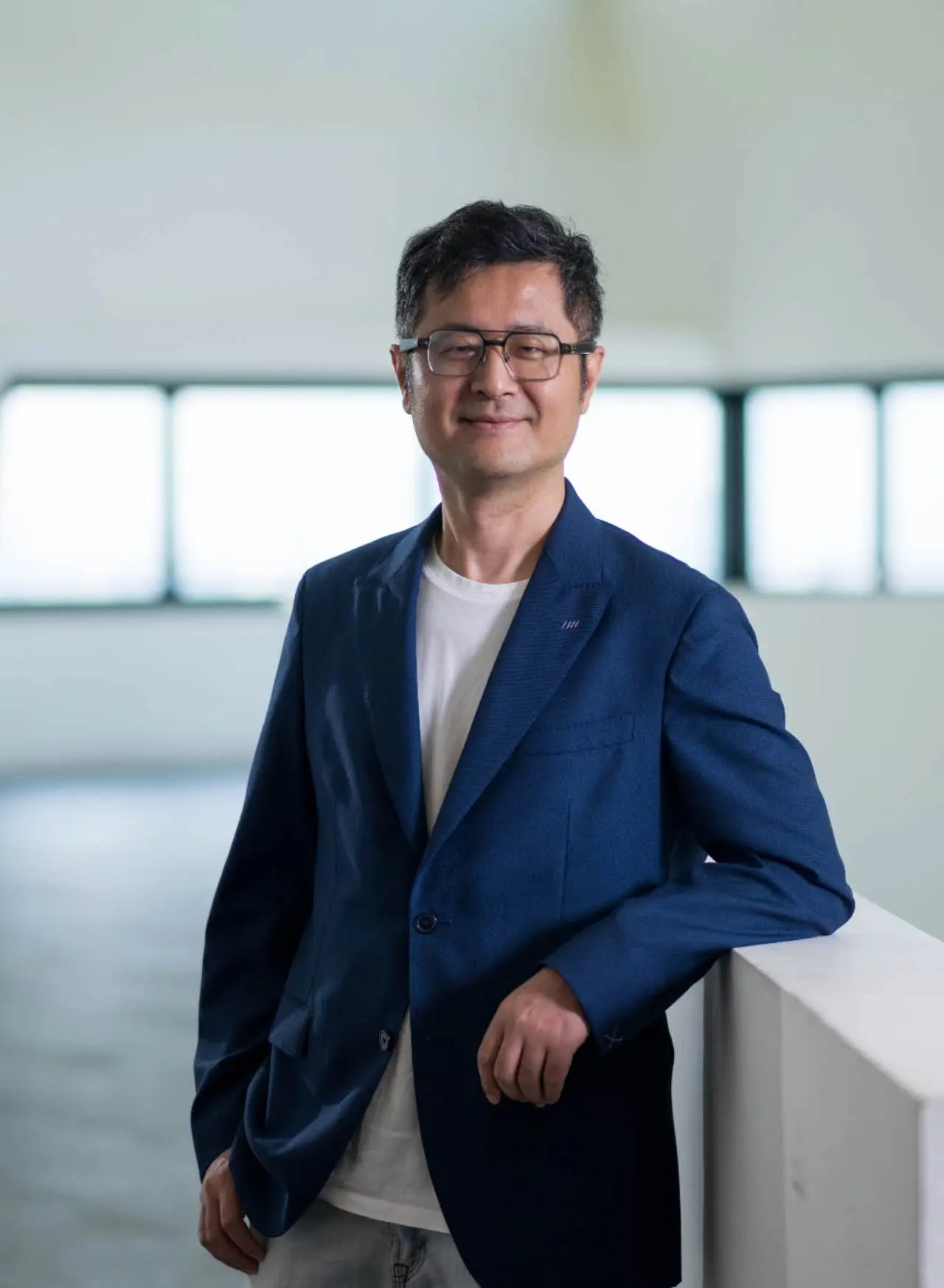
Bio
Shengdong Zhao is a Professor in the School of Creative Media and the Department of Computer Science at City University of Hong Kong. He established and led the Synteraction (formerly NUS-HCI) research lab in 2009 at the National University of Singapore. Prof. Zhao received his Ph.D. in Computer Science from the University of Toronto and a Master's degree in Information Management Systems from the University of California, Berkeley. With extensive experience in developing innovative interface tools and applications, Prof. Zhao is a regular contributor to top-tier HCI conferences and journals like CHI, ToCHI, Ubicomp/IMWUT, CSCW, UIST, and IUI. He served as a senior consultant with Huawei Consumer Business Group in 2017. An active member of the HCI community, Prof. Zhao serves on program committees for major HCI conferences and was the paper co-chair for ACM SIGCHI conference in 2019 and 2020, and is the paper co-chair for ACM UIST conference in 2025. Prof. Zhao introduced the concept of Heads-up Computing in 2017, contributing to several key projects and publications in this area, including a featured article on heads-up computing in the September 2023 issue of Communications of the ACM. His research aims to develop innovative interface tools that enhance daily life through this new interaction paradigm. For more information about his work, please visit www.shengdongzhao.com.